
A family safari in Africa is one of the most transformative experiences you can give your children. Here's how to plan it safely, affordably, and unforgettably.
A family safari in Africa is one of the most transformative experiences you can give children — and one of the most rewarding you can share with them as a parent. Watching your child's face when a wild elephant walks within ten metres of the vehicle, or when a cheetah crosses the road in front of you, is something that stays in a family's story for generations. The question is not whether to take children on safari, but how to plan it so the experience is safe, age-appropriate, and unforgettable for everyone.
Minimum Age Requirements
Most Tanzania safari operators and national parks allow children of six years and older on standard game drives. Some exclusive camps set the minimum at twelve years for certain activities, particularly walking safaris and night drives. Budget camping safaris with shared vehicles often set a higher minimum age — eight to ten — because the long drives and early starts are harder for young children to manage.
For gorilla trekking in Rwanda, the minimum age is fifteen — set by Rwanda Development Board and strictly enforced. Children under fifteen cannot participate in gorilla trekking regardless of operator or parental consent. If gorilla trekking is on your family's wish list, plan for when your youngest child is old enough.
Best Parks for Families
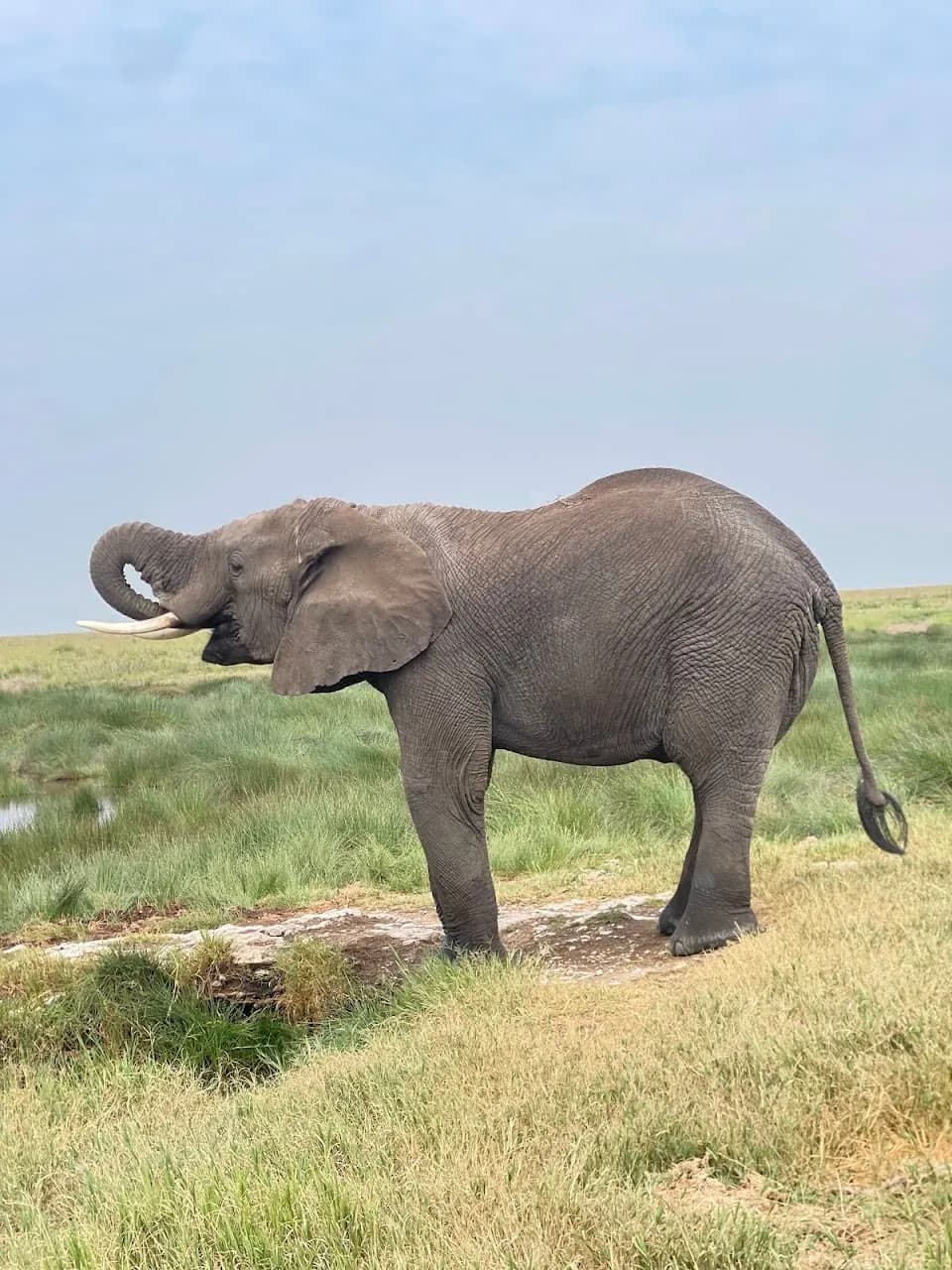
Not all Tanzania parks are equally family-friendly. The best choice depends on your children's age and interests. Tarangire National Park is an exceptional family destination: the elephant population is extraordinary (hundreds of elephants around water sources in dry season), the landscapes are varied and dramatic, and the shorter distances from Arusha reduce travel time. Ngorongoro Crater is also excellent — the enclosed geography means high wildlife density and reliable sightings that keep children engaged.
For families with older children and teenagers, the Serengeti offers the most dramatic experience — particularly during calving season (January–February) when the sheer abundance of predator-prey interactions holds even phone-addicted teenagers completely captivated. Younger children (six to ten) often respond better to the visual drama of Ngorongoro and Tarangire than to the broader Serengeti landscape, where distances between sightings can be longer.
Private vs Shared Vehicles
For families, a private vehicle is not a luxury — it is a practical necessity. A private vehicle lets you set the pace, stop when children need to stretch or use the bathroom, spend extra time at sightings that fascinate them, and leave when young children hit their limit. Shared vehicles in group safaris are run on a schedule that serves the average adult, not a seven-year-old who has been sitting still for three hours.
Private vehicles also give your guide the freedom to conduct a genuinely educational experience — stopping to explain tracks, plants, bird calls, and the ecosystem in a way tailored to your children's interests. The best family safari guides are skilled at engaging children: asking questions, involving them in spotting, teaching them to identify animals. This educational dimension transforms a sightseeing trip into an experience that shapes how children understand the natural world.
Practical Tips for Safari with Children
- ›Book camps with family rooms or adjoining tents — many luxury camps have specifically designed family units
- ›Choose camps with swimming pools — essential for afternoon breaks between game drives
- ›Pack a wildlife field guide at the right level for your child's age — DK Eyewitness Safari is excellent for 8–14 year olds
- ›Bring binoculars for each child — having their own pair transforms passive observation to active participation
- ›Build in rest time — trying to do four game drives per day with children under ten leads to exhaustion and tears
- ›Early morning game drives are the most productive — but let children sleep in on one morning per trip
- ›Bring a small notebook for children to record animal sightings — a wildlife diary creates a lasting memento
Health Considerations for Children
Malaria prophylaxis is essential for children travelling to Tanzania, Kenya, and Rwanda. Consult your GP or travel clinic well in advance — children have specific dosing requirements based on weight, and some adult prophylaxis medications are not suitable for young children. DEET-based insect repellent should be applied at dawn and dusk when mosquitoes are most active. The safest products for children are those with 20–30% DEET — lower concentration than adult products but still effective.
Sun protection is critical. The equatorial sun through an open vehicle roof hatch is intense, and children burn quickly. Apply SPF 50+ sunscreen every two hours during game drives, and ensure children wear long sleeves and wide-brim hats during the peak sun hours of 10 AM to 3 PM. Hydration is also important — children should drink at least 1.5 litres of water per day in the heat, which can be challenging when they are focused on wildlife.
Adding Zanzibar for Families
Zanzibar is an excellent family extension, particularly the calm north coast beaches at Nungwi and Kendwa where the water is swimmable at all tidal states. The Prison Island Tortoise Sanctuary — a 15-minute boat ride from Stone Town — is hugely popular with children: you can walk among and hand-feed giant Aldabra tortoises, some over 100 years old and enormous. Dolphin tours off the south coast are another family favourite, though choose responsible operators who do not chase or harass the animals.
Children who grow up with a safari memory are children who understand that wild animals exist and matter — not as abstractions in a documentary but as real creatures they have seen, smelled, and felt the presence of. That understanding is a gift worth planning a trip around.
Based in Arusha, Tanzania
Ready to Experience It First-Hand?
Our expert team creates custom itineraries for every budget and timeframe. Get your personalised quote within 24 hours.