An hour with a mountain gorilla family in the Virunga Mountains is one of the most profound wildlife encounters on Earth. Here's how to make it happen.
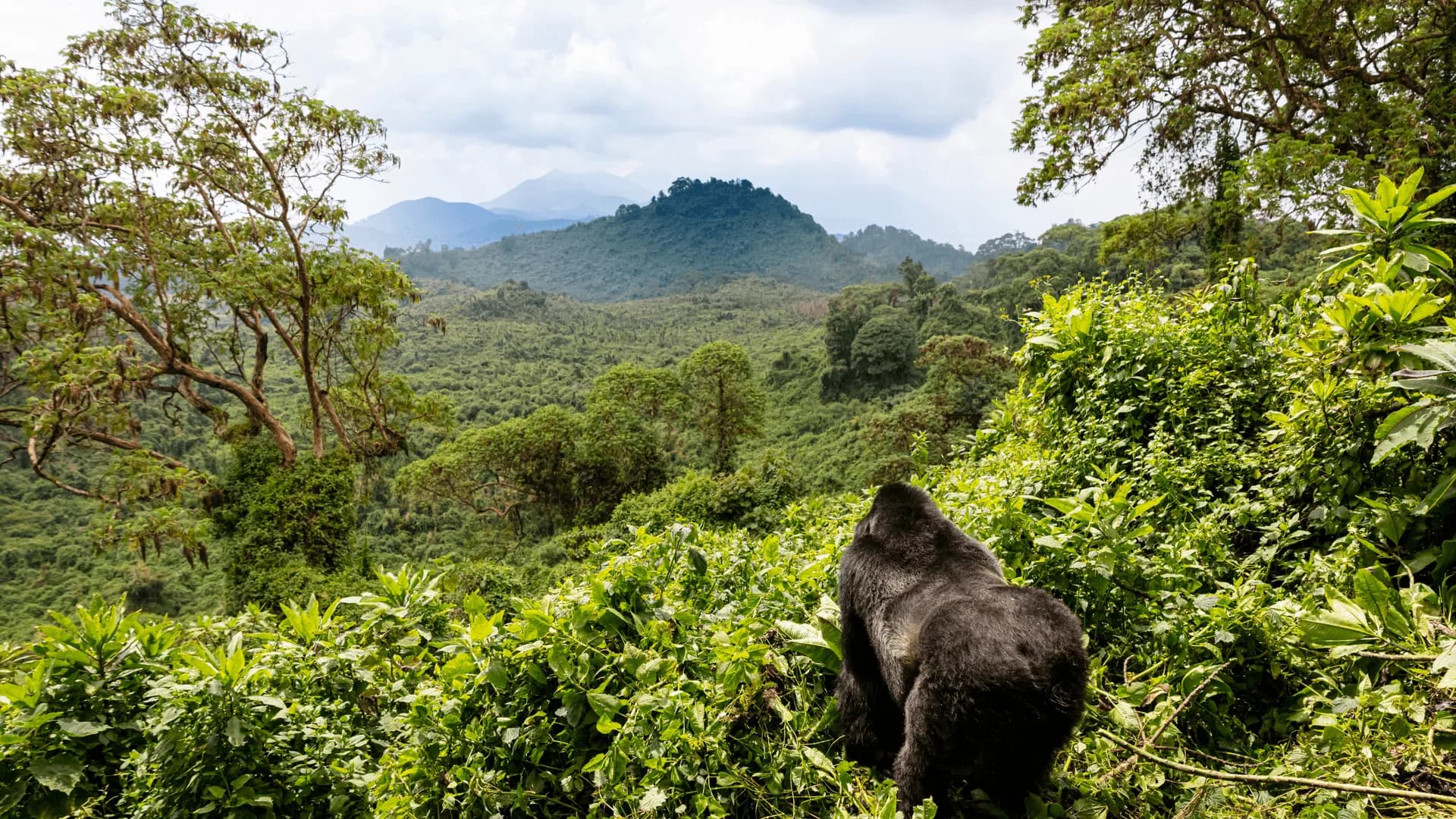
There are approximately 1,000 mountain gorillas left on Earth. All of them live in a single mountain forest ecosystem straddling Rwanda, Uganda, and the Democratic Republic of Congo. To sit with a gorilla family in the misty bamboo forest of the Virunga Mountains is to experience something that very few people ever will — and Rwanda's Volcanoes National Park is where that experience is most accessible, most organised, and most extraordinary.
Why Rwanda for Gorilla Trekking?
Rwanda and Uganda both offer gorilla trekking, and Uganda is slightly cheaper. But Rwanda consistently delivers a superior overall experience. Volcanoes National Park is well-managed, the trek lengths are moderate (most gorilla families are found within two to four hours of walking), and the infrastructure around the park — including some of Africa's finest lodges — is exceptional. Rwanda is also safer, more compact, and easier to reach than the Bwindi Impenetrable Forest in Uganda, which requires a long drive from Entebbe or Kampala.
The Rwandan gorilla permit costs $1,500 per person — the highest in the world. This price is deliberate: the revenue funds park protection, anti-poaching patrols, ranger salaries, and community development projects. It is also, in context, not unreasonable for a one-hour experience with one of the most endangered great apes on Earth. The money you spend on a gorilla permit goes directly into the ecosystem that keeps these animals alive.
How to Get a Gorilla Permit
Rwanda Development Board (RDB) issues gorilla permits and controls the permit allocation. Permits must be booked in advance through RDB directly or — more reliably — through a licensed tour operator. For peak months (June, July, August, December, and January), permits sell out six to twelve months in advance. Do not plan a Rwanda gorilla trip without confirming permit availability first. This is the critical bottleneck in the entire itinerary.
Only eight visitors per gorilla family per day are permitted, and Volcanoes National Park has twelve habituated gorilla families available for tourism. This means a maximum of 96 gorilla trekking permits per day — for the entire country. The scarcity is intentional and essential: minimising human contact protects the gorillas from disease and stress. This limit is one of the reasons the Rwanda gorilla experience feels so intimate and unhurried.
Permit Booking Tip
Book your permits at least 9–12 months in advance for June–August travel. Booking through a reputable tour operator based in Kigali gives you better access than trying to book directly — operators often hold permit allocations and can advise on family selection.
Which Gorilla Family to Request
Each of the twelve habituated gorilla families has a different character, home range, and trek difficulty. Some families roam at high altitude — above 3,000 metres — requiring a strenuous uphill hike in thin air. Others range at lower elevations with easier access. The Susa group, one of the largest families at over 40 individuals, is famous but involves one of the longest and most demanding treks. The Amahoro family is often recommended for first-time trekkers because of its gentle members and more accessible range.
Your tour operator should match you to a family based on your fitness level, your interest in family size and dynamics, and any specific features you want to see — dominant silverbacks, infants, inter-family dynamics. This is a question worth asking explicitly when you book. The gorilla family you spend your hour with will define your memory of the experience.
What Happens on Trekking Day
Trekkers assemble at the park headquarters at 7:00 AM for a briefing. Groups are assigned their gorilla family and their lead ranger. The trek begins at the park boundary and follows rangers through bamboo forest, dense undergrowth, and sometimes steep volcanic slopes. Trackers go ahead of the main group, locating the gorilla family by following their trail from where they nested the previous night.
When the trackers signal that the family has been found, the group advances quietly to within a safe distance — seven metres is the minimum required separation. Then the hour begins. The gorilla family goes about their morning: infants play and wrestle, juveniles chase each other through the undergrowth, the silverback sits massive and unhurried in the vegetation. Sometimes a juvenile will approach and study you with intelligent eyes that feel uncomfortably familiar. Sometimes the silverback rises on his legs — a display of dominance — and your ranger calmly holds his ground.
The hour passes very quickly. Photography is permitted without flash. Video is permitted. You are asked not to eat, drink, or use your phone for calls. When the hour ends, you walk back to the trailhead and receive a certificate confirming your gorilla trek. Most trekkers describe the experience as one of the most profound of their lives — not just as a wildlife encounter, but as a reminder of the thin line between human and animal.
Trek Fitness Requirements
Gorilla trekking is classified as moderate to strenuous. The altitude of Volcanoes National Park ranges from 2,400 to 4,507 metres, and most treks involve hiking uphill through dense forest for one to six hours depending on where the family is that day. You do not need to be an athlete, but you should be able to walk uphill for two to three hours at a moderate pace without stopping. Age limit is 15 years. Porters are available for hire at the trailhead — using a porter is strongly recommended and provides income for the local community.
What to Wear and Bring
- ›Long-sleeved shirt and long trousers — the forest has stinging nettles and biting insects
- ›Waterproof hiking boots with ankle support — essential for the muddy, uneven terrain
- ›Rain jacket — the Virunga Mountains receive rain year-round, especially in the afternoons
- ›Gardening gloves — useful for grabbing vegetation on steep sections
- ›Camera with a fast lens — the forest is dark; f/2.8 or wider is ideal
- ›Small daypack with water (1.5 litres minimum), snacks, and sunscreen
- ›Walking stick — provided at the trailhead, worth using
Best Time to Go Gorilla Trekking
Gorilla trekking is available year-round and the gorillas do not follow a migration pattern. The two dry seasons — June to September and December to February — offer the most reliable trekking conditions: drier trails, clearer skies, and easier walking. The rainy seasons (March to May and October to November) see fewer tourists, lower lodge rates, and lush green forest. The gorillas are still easy to find — ranger trackers follow them daily — but the trails are muddier.
Combining Rwanda Gorillas with Tanzania Safari
Rwanda and Tanzania are natural partners in an East Africa itinerary. Kigali connects directly to Kilimanjaro International Airport (JRO) near Arusha, and many travellers combine two to three days for gorilla trekking in Rwanda with a five to eight day Tanzania safari. The contrast is remarkable — the intimate forest encounter with a gorilla family, followed by the vast open plains of the Serengeti and the spectacle of the Great Migration.
Gorilla trekking in Rwanda is one of the few wildlife experiences in the world where every person who does it — regardless of personality, interests, or prior travel experience — comes back transformed. The $1,500 permit feels expensive until you are sitting three metres from a mountain gorilla and realise you are looking at something that may not exist in another fifty years without the revenue you just provided.
Based in Arusha, Tanzania
Ready to Experience It First-Hand?
Our expert team creates custom itineraries for every budget and timeframe. Get your personalised quote within 24 hours.