
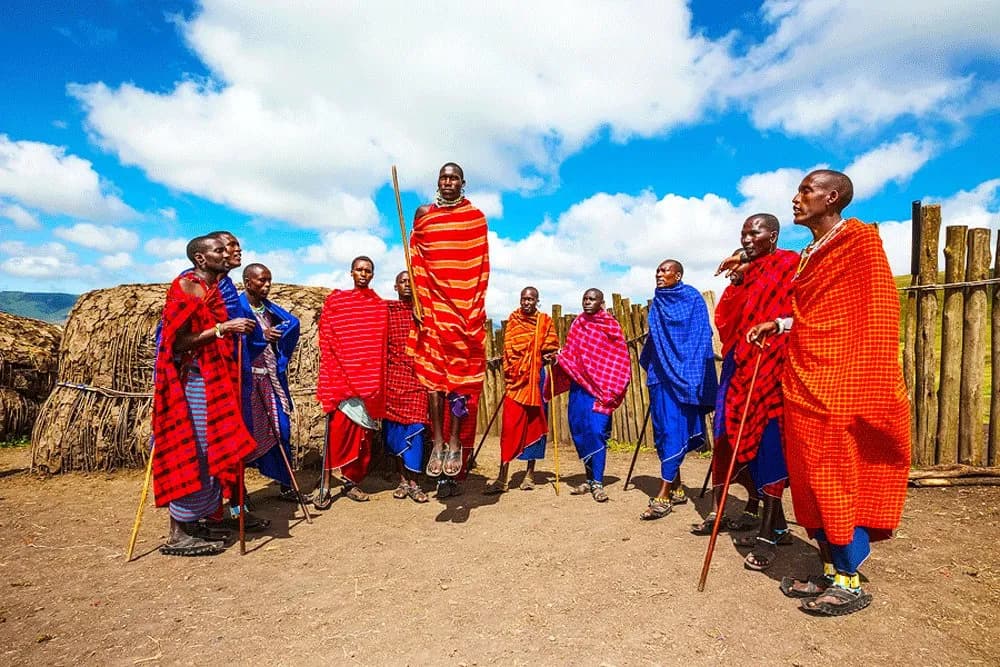
The Maasai are one of Africa's most recognisable peoples — but there is far more to their culture than the red shukas and jumping dances that most tourists see.
The Maasai are among the most photographed, most written about, and most recognised indigenous peoples in the world — and yet most safari visitors leave Tanzania knowing very little more about them than the red cloth and the jumping. This is partly the fault of the condensed boma visit that most itineraries include: a 45-minute stop at a community settlement, a demonstration of jumping, a fire-making display, and a look around the craft market. It is authentic in some respects and performance in others, and it rarely scratches the surface of a culture that has resisted assimilation for centuries in one of the most contested and wildlife-rich landscapes on earth.
Who Are the Maasai?
The Maasai are a Nilotic people who migrated south from the Nile Valley region around the fifteenth century, eventually settling across what is now southern Kenya and northern Tanzania. At their peak in the nineteenth century, Maasai territory extended from what is now central Kenya to the Great Rift Valley in Tanzania — a vast pastoral domain held by warriors whose reputation made them feared across East Africa. European colonisers, arriving in the late nineteenth century, found the Maasai to be the one people across the region who did not easily capitulate, and the colonial land agreements that followed — confining Maasai communities to specific reserves — are still contested today.
The Maasai are semi-nomadic pastoralists. Their wealth is measured in cattle — a man's social status, his eligibility for marriage, and his ability to function as a fully adult member of the community are all tied to the size and health of his herd. Cattle are not just assets; they are spiritual currency, family history, and social contract. The Maasai traditionally eat a diet of meat, blood, and milk — a protein-rich diet that sustained their warrior culture across centuries of conflict and environmental variability.
The Age-Grade System
Maasai society is organised around a system of age grades — cohorts of men who pass through defined life stages together. Boys in the same age group are circumcised together, enter the warrior (moran) grade together, retire from warriorhood together, and advance to elder status together. These bonds, forged in the shared experience of each stage, create extraordinarily tight social cohesion within each age group.
The moran — junior warriors typically between 15 and 30 years of age — are the most visible and most photographed members of Maasai society. They wear the red shuka (cloth), carry spears, braid and dye their long hair with ochre, and are the cohort responsible for protecting the community's cattle from predators and from raiding. Historically, a young man proved his worth as a warrior by killing a lion alone with a spear — a practice now illegal and increasingly rare, though it remains a point of cultural reference and pride.
Coexisting with Wildlife
The most remarkable aspect of Maasai culture, from a conservation perspective, is the tradition of coexistence with wildlife on a scale that is almost without parallel in the world. Maasai communities have historically allowed wildlife to move through their grazing lands without systematic persecution. Lions, leopards, and elephants share territory with Maasai cattle across enormous areas of the Serengeti-Mara ecosystem and the Amboseli basin. This coexistence is not always comfortable — cattle are killed by predators, and the tension between conservation economics and pastoral livelihoods is real and ongoing — but the landscape-level tolerance has been critical to the survival of East Africa's great wildlife populations.
This relationship is being formalised today through community conservancies, where Maasai landowners receive direct payment for allowing wildlife to use their land. In the Amboseli-Tsavo ecosystem in Kenya and in the Ngorongoro Conservation Area in Tanzania, Maasai communities are active stakeholders in wildlife tourism — receiving bed-night fees, employment, and conservation payments that make the lion on their land worth more alive than the equivalent area of farmland.
What a Boma Visit Actually Looks Like
A boma is a Maasai homestead — a circular settlement of small, mud-plastered houses arranged around a central cattle enclosure, protected by a thornbush fence. The boma visit included in most Tanzania safari itineraries offers a genuine window into this domestic world, even if it is also a commercial transaction.
At a good boma visit, you will see the homestead structure — the layout of the houses, the relationship between the cattle enclosure and the living quarters, the way the settlement manages the movement of animals at night. You will see traditional fire-making (friction sticks), hear the songs specific to age groups and ceremonies, and watch a demonstration of the adumu jumping dance — a warrior's test of athleticism and social display. Women will show you their beadwork, which is as complex a visual language as any African textile tradition: each colour and pattern combination communicates specific information about the wearer's age, marital status, and community.
Choosing a Genuine Boma Visit
There is a significant difference between a highly commercialised boma on the main tourist routes and a community visit arranged through a Maasai-owned enterprise or a trusted local operator. Ask your safari company whether the boma visit involves genuine community engagement or a performance for tour buses. The latter is not without value, but it is not the same experience.
The Maasai Today
The contemporary Maasai story is one of cultural negotiation under pressure. Access to education, mobile phones, and wage employment has drawn younger Maasai into the wider Tanzanian and Kenyan economies, while land pressure from agricultural expansion, conservation boundaries, and infrastructure development continues to shrink the pastoral territory. The tension between preserving cultural identity and accessing the opportunities of the modern economy is felt acutely across every Maasai community.
Many Maasai are navigating this tension in remarkable ways. Maasai-owned tourism enterprises — conservancies, cultural centres, guide training programmes — are creating economic pathways that tie cultural preservation directly to income. A Maasai guide in the Amboseli ecosystem who speaks fluent English, can name every bird by Latin and Maa name, and can also explain the governance structure of his family's land rights is not a contradiction of his culture — he is a product of its extraordinary adaptability.
The red shuka and the jumping warrior have become visual shorthand for East African wilderness the world over. But the more time you spend with Maasai communities — through genuine cultural engagement rather than a staged visit — the more complex, resourceful, and deeply rooted in the land this people reveals itself to be. Their presence in the landscape is not a curiosity on the edge of your safari; it is part of what makes the ecosystem function.
Based in Arusha, Tanzania
Ready to Experience It First-Hand?
Our expert team creates custom itineraries for every budget and timeframe. Get your personalised quote within 24 hours.