.webp&w=3840&q=75)
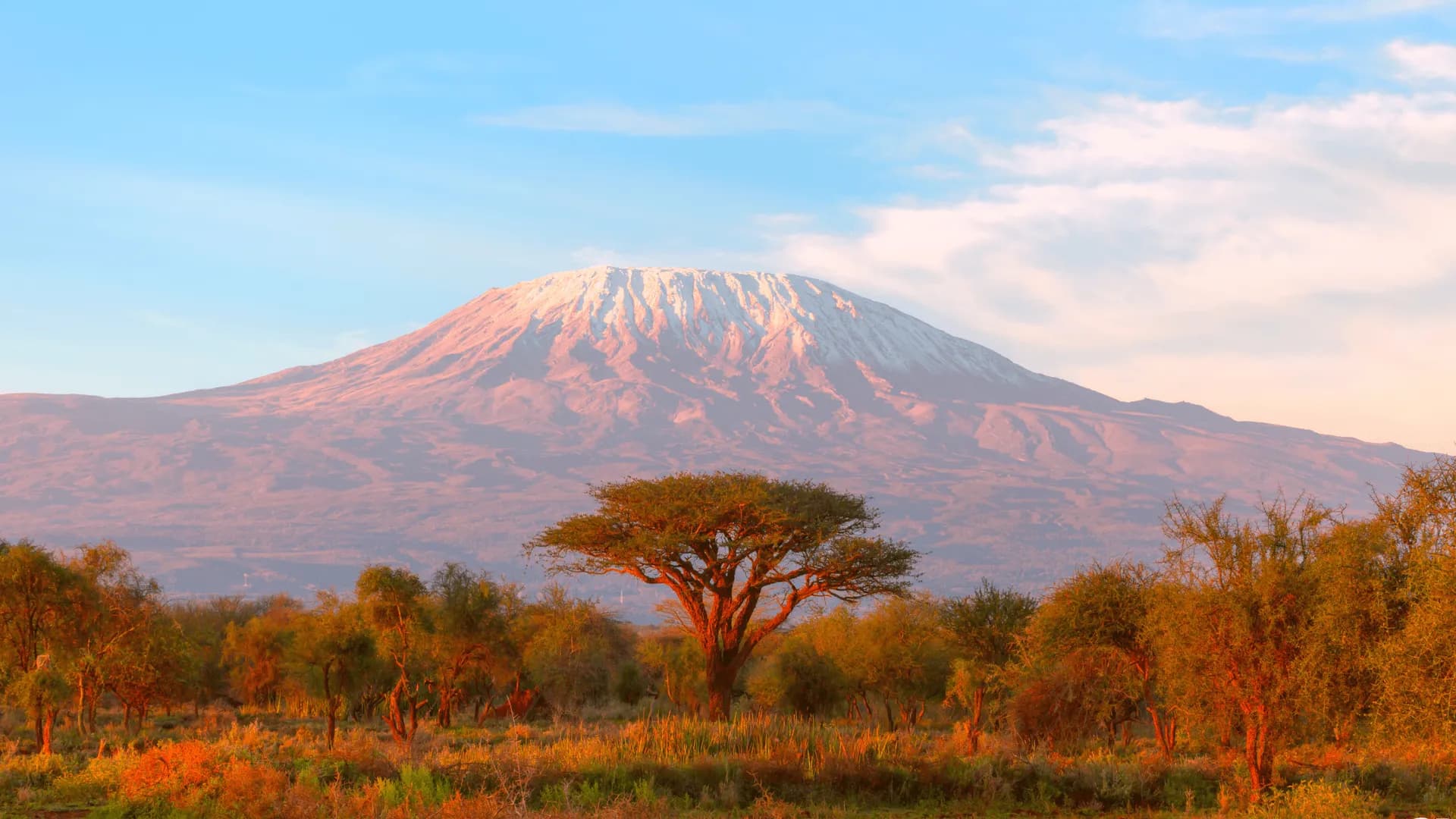
Kilimanjaro
5,895m
Africa's highest peak. The world's tallest free-standing mountain. Guided by Tanzania-born experts who have stood on the summit hundreds of times.
Choose Your Route
Machame Route
The Whiskey Route
The most scenic and popular route, nicknamed the "Whiskey Route" for its challenging terrain. Excellent acclimatisation profile with a high-camp, low-sleep approach.
.webp&w=3840&q=75)
Lemosho Route
The Scenic Route
Widely considered the best overall route. Starts remote on the western slope, crosses the Shira Plateau and delivers the highest summit success rate of all standard routes.
.webp&w=3840&q=75)
Marangu Route
The Coca-Cola Route
The classic route and the only one with hut dormitory accommodation throughout. The most affordable option, though its rapid ascent reduces summit success rates.
.webp&w=3840&q=75)
Rongai Route
The Northern Approach
The only route approaching from the north near the Kenyan border. Quieter, drier, and ideal during the rainy season. A true wilderness feel with gentle gradients.
.webp&w=3840&q=75)
Umbwe Route
The Direct Route
The steepest and most direct route — for experienced trekkers only. Gains elevation rapidly through dense forest and dramatic ridgelines before joining the Southern Circuit.
Northern Circuit
The Longest Route
The newest and longest route, circumnavigating the entire mountain for a four-sided view. The extra days deliver the best acclimatisation and the highest summit success rate of any route.
Kilimanjaro Route Maps
Select a route to explore its map, difficulty, and what makes it unique.
Machame Route
The Whiskey Route
The most scenic and popular route on Kilimanjaro, nicknamed the "Whiskey Route" for its challenging terrain. Beginning at Machame Gate on the southern slope, the trail winds through magnificent rainforest before ascending to the Shira Plateau. The route offers an excellent acclimatization profile with its high-camp, low-sleep approach. Descent is via the Mweka trail.
What to Pack
12 essentials your porters won’t carry for you — everything else is handled.
Clothing & Warmth
Layering System
Thermal base layers, fleece mid-layer, waterproof shell jacket & trousers
Sleeping Bag
Rated to -10°C / 14°F. Warmth is critical above 4,000m at night
Trekking Boots
Waterproof, ankle-supporting, well broken-in before the climb
Gaiters
Keep debris and water out of boots on volcanic scree sections
Essential Gear
Trekking Poles
Collapsible poles reduce knee strain significantly on descent
Headlamp + Batteries
Essential for summit night (3am start). Bring spare batteries
Waterproof Bag
Keep electronics and sleeping bag dry — rain is unpredictable
Health & Safety
Altitude Medicine
Diamox (acetazolamide) — consult your doctor before the climb
First Aid Kit
Blister treatment, ibuprofen, anti-nausea tablets, bandages
Sun Protection
SPF 50+ sunscreen, UV-blocking sunglasses, wide-brim hat
Fuel & Hydration
Hydration System
2–3 litre water bladder or bottles. Water freezes at summit
Snacks & Energy
High-calorie snacks: nuts, chocolate, energy gels for summit push
Pro tip from our guides
The single biggest mistake climbers make is packing too heavy. Every extra kilogram will slow your summit attempt. Our porters carry your main bag (max 15 kg) — keep your day pack to 5–7 kg with just the essentials.
When to Summit
Kilimanjaro never closes — but the mountain rewards those who choose their window wisely.
Prime Season
June → October
Cold, dry and clear. Every route fully open. Your best chance of standing on Uhuru Peak.
- Clear summit skies on most days
- All 6 routes fully operational
- Dry underfoot — trails at their best
- Peak porter & guide availability
Shoulder Season
Dec · Jan · Feb
Warm and generally dry. Wildlife-rich around the mountain. Fewer crowds, still great summit odds.
- Good visibility & milder temperatures
- Calving season — exceptional wildlife
- Quieter trails than peak months
Rain Season
Mar · Apr · May · Nov
Long and short rains bring muddy trails, reduced summit visibility, and lower success rates.
- Heavy rainfall — trails become difficult
- Poor summit-day visibility common
- Some high camps partially inaccessible
We still run climbs on request — conditions vary significantly year to year.
Before You Climb
Field-tested knowledge from our guides, written for climbers who want to be genuinely prepared.
Machame vs Lemosho: Which Route Is Actually Better?
Read the guideReady for the Summit?
Tell us your fitness level, dates, and budget — we'll match you with the perfect Kilimanjaro route.
Plan My Kilimanjaro Trek