The complete guide
The Cessna banks once over the plains, and the pilot points wordlessly out the left window: the herds, spread beneath you like spilled pepper, all the way to the escarpment. Fifteen minutes later you're on a dirt airstrip in the middle of the Serengeti, a guide is loading your bag into a Land Cruiser, and there are lions before lunch. Total time from Arusha: about ninety minutes. The same journey by road is the better part of a day.
That arithmetic is the entire case for a fly-in safari — and this guide makes it honestly, including the counter-case: what you give up when you skip the road, who should fly, who should drive, and what the premium actually buys.
What Exactly Is a Fly-In Safari?
Instead of driving between parks, you hop between bush airstrips on scheduled light aircraft — twelve-seater Cessna Caravans, mostly — while dedicated guides and vehicles meet you at each destination. The classic version is our 5-day Serengeti Fly-In: a direct flight from Arusha into Central Serengeti for two full days in prime predator territory, then the Ngorongoro Crater and Lake Manyara on the return leg — five days that would need seven by road.
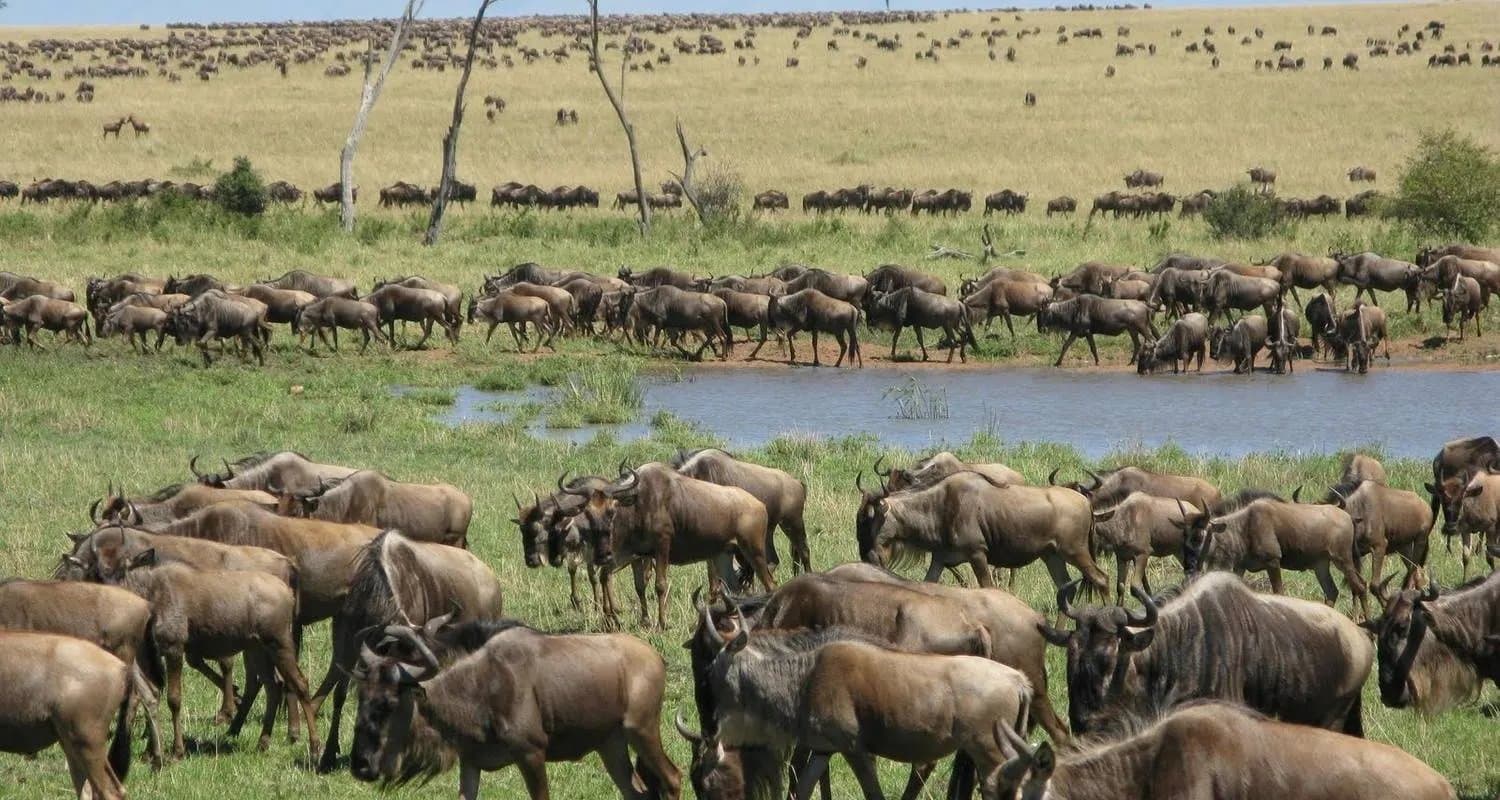
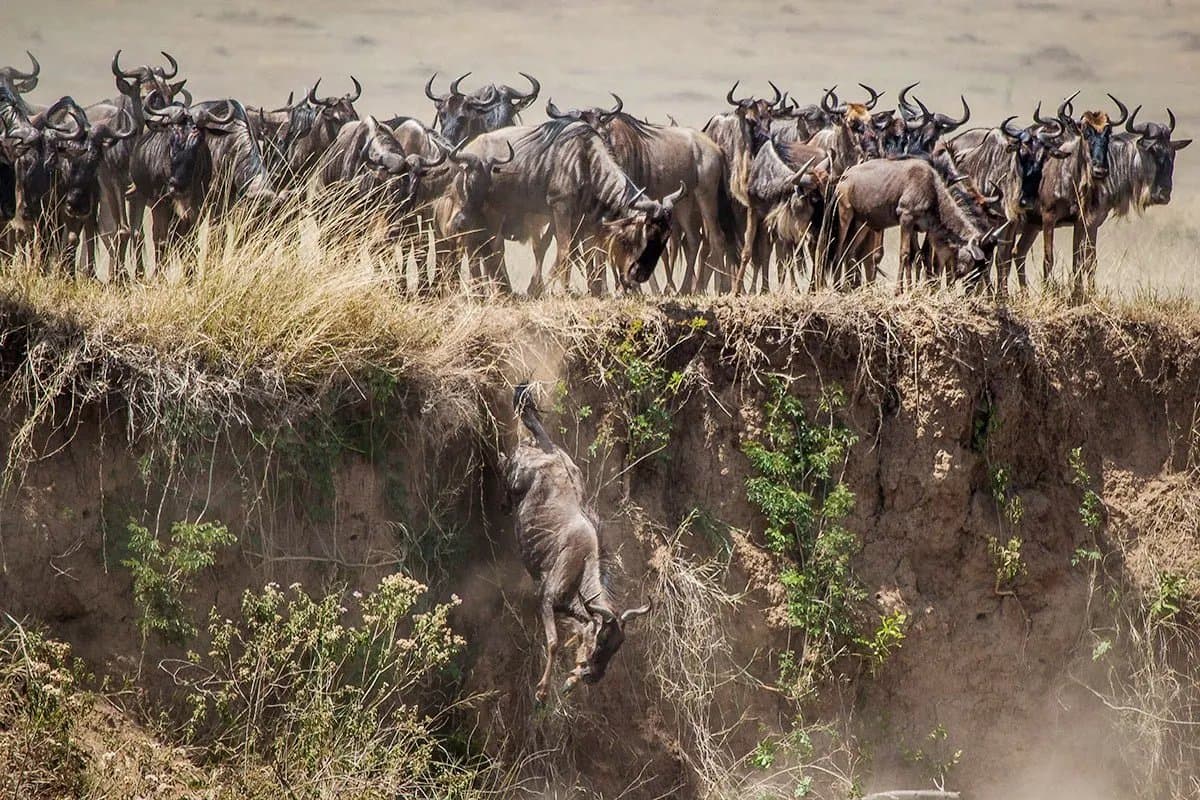
The format scales with ambition: seasonal versions fly you straight to the migration — Ndutu's calving grounds in the south or Kogatende in the north for the river crossings — placing you inside the event within hours of landing in Tanzania, no two-day approach march required.
Why Flying Changes the Trip
The time math is brutal and honest. On a five-day window, road transfers can consume two entire days. Flying converts them into game drives — on a short trip, that's a 30–40% increase in actual safari. For honeymooners tacking safari onto Zanzibar, or travelers with one week total, the flight pays for itself in mornings.
The flight is itself a scenic event. Bush flights run low enough that the Rift Valley wall, the crater highlands and the herds all read clearly from the window. It is not a transfer; it's a preview.
The honest counter-case: you lose the road. Driving the Rift Valley escarpment, the Maasai villages and the slow gear-change from town to wilderness is a genuine experience — the landscape earning itself gradually. Fly-in trades that for depth in fewer places; travelers with ten or more days often drive one way and fly the other, which is the best of both.
When to Go
Fly-in safaris run year-round, and the format's superpower is seasonal precision: because you're not committed to a road circuit, the itinerary can target exactly where the ecosystem is performing. January to March, fly south to Ndutu for calving season. July to October, fly north for the crossings. In the between-months, Central Serengeti remains reliably rich — resident prides don't migrate.
The one seasonal caveat is the long rains (April–May), when some airstrips get temperamental and schedules occasionally reshuffle around weather. Flights still operate; flexibility helps. Fares and lodge rates in those months are at their friendliest, which for the unhurried is a fair trade.
What a Typical Itinerary Actually Looks Like
Day 1
Arusha → Central Serengeti
Morning bush flight over the highlands; game driving by early afternoon. The commute is the first sighting.
Days 2–3
Deep Serengeti days
Two full days with a dedicated guide in prime predator country — no repositioning, no packing, just range.
Day 4
Ngorongoro Crater
Out by air or scenic drive to the highlands, then dawn on the crater floor for the Big Five morning.
Day 5
Manyara & out
A final drive through Lake Manyara’s groundwater forest, then back to Arusha — or a connecting hop straight to Zanzibar.
What It Costs, and What Drives the Price
The signature 5-day Serengeti Fly-In starts from $2,475 per person — often less than travelers expect, because saved road days offset some of the airfare. Migration-timed versions run from $4,000 per person (7 days over Ndutu's calving) to $4,500 per person (8 days to the northern crossings).
- ›The flights themselves — scheduled bush-plane seats are the visible premium over an equivalent road itinerary; the invisible rebate is two fewer transfer days to pay for.
- ›Where you land — remote, seasonal airstrips (Kogatende, Ndutu) cost more to serve than Central Serengeti; precision has a price.
- ›Lodge tier — fly-in guests skew toward camps near airstrips in prime zones, which are premium locations by definition.
- ›Group vs private vehicle on arrival — shared game-drive vehicles keep costs down; a private vehicle at each stop is the common upgrade.
What's included
- Bush flights as itinerary specifies
- Guide & 4x4 at each destination
- All park fees & full-board lodging
- Airstrip transfers throughout
Not included
- International flights & visa
- Tips & gratuities
- Premium drinks at select camps
- Travel insurance
What to Pack — the Luggage Rules Are Real
Light aircraft enforce what airlines only threaten: typically 15 kg per person in soft-sided bags, weighed, no hard shells (they don't fit the hold's curves). It sounds restrictive and turns out liberating — camps do same-day laundry, safari dress codes peak at 'clean fleece,' and nobody has ever missed their third pair of shoes at 5,000 feet over the Serengeti.
Photo gallery
What our guests say
“Unforgettable! We completed a 5-day tour that was genuinely life-changing. The accommodations, transportation, and game drives were all top-notch. Our guide was extraordinary — deeply passionate about wildlife and conservation, and his knowledge made every drive educational and thrilling. EWA Safari Outfitters truly delivered beyond our expectations.”
Renard — 5-Day Tanzania Safari
“EWA Safari Outfitters gave us the most incredible experience of our lives. Our guide Samuel knew exactly where to find the leopard we'd been hoping to see — and delivered it on our last morning. Every detail was perfect. We'll be back for Kilimanjaro!”
Sarah & Michael Thompson — 7-Day Serengeti & Ngorongoro
Frequently asked questions
Are the small planes safe?
Bush aviation in Tanzania is a mature, regulated industry — scheduled operators fly these routes daily under civil aviation oversight, with professional two-pilot or single-pilot crews and modern turboprop aircraft. Flights are low, short and scenic; turbulence is the small-plane tax, mostly mild and worst midday. Nervous flyers report the window view cures more anxiety than it causes.
Is fly-in worth the premium over driving?
On short trips, decisively: five days flying delivers roughly the game time of seven driving, which more than absorbs the fare difference. On longer trips the case softens — with ten days, road transfers stop being the constraint and the overland journey has its own rewards. Our honest rule of thumb: under a week, fly; over ten days, mix.
How strict is the 15 kg luggage limit?
Strict — bags are weighed, and hard-shell cases are refused for fit, not spite. Excess arrangements are sometimes possible but never guaranteed. Most guests find 15 kg generous once laundry service enters the equation; your Kilimanjaro-plus-safari gear problem is solvable with left-luggage in Arusha, which we arrange routinely.
Can fly-in connect straight to Zanzibar?
Seamlessly — it is one of the format’s best tricks. Flights connect from Serengeti airstrips through Arusha to Zanzibar in an afternoon, turning bush-to-beach into a same-day gear change. Safari ending at 10 AM, toes in the Indian Ocean by sunset.
Do I still get a proper guide and vehicle?
Yes — flying changes the commute, not the safari. At every destination a professional guide and 4x4 handle your game drives; on shared-vehicle itineraries you join a small group at each camp, and private vehicles are available as an upgrade throughout.
What happens if weather delays a flight?
Bush schedules build in slack, and operators re-route or re-time around weather as standard practice — genuine cancellations are rare outside the long rains. Your ground team adjusts pickups automatically; the practical advice is simply not to book razor-thin international connections on your final day.
How long is the flight from Arusha to the Serengeti?
Around 60–90 minutes to a central Serengeti airstrip depending on routing and stops — versus the better part of a day by road. Seasonal strips like Kogatende and Ndutu add a short onward hop.