The complete guide
There is a specific moment that sells Ruaha to everyone who visits: you're parked beside a pride of lions — twenty of them, maybe more, draped over a riverbank like the aftermath of a party — and at some point you realize what's missing. Engines. Other vehicles. Anyone. You check the horizon in every direction and the only things moving are giraffes. The sighting is entirely, absurdly yours.
Ruaha and Katavi are what Tanzania looks like off the guest-count charts. Ruaha is the country's largest national park — a semi-arid wilderness of baobabs and sand rivers holding roughly a tenth of Africa's lions. Katavi, further west, is harder to reach and wilder still: a park that measures its annual visitors in the hundreds, where the dry season packs hippos into shrinking pools by the many hundreds and the buffalo herds run to the thousands. This guide covers both, honestly — including who shouldn't go.
What Exactly Is a Ruaha & Katavi Safari?
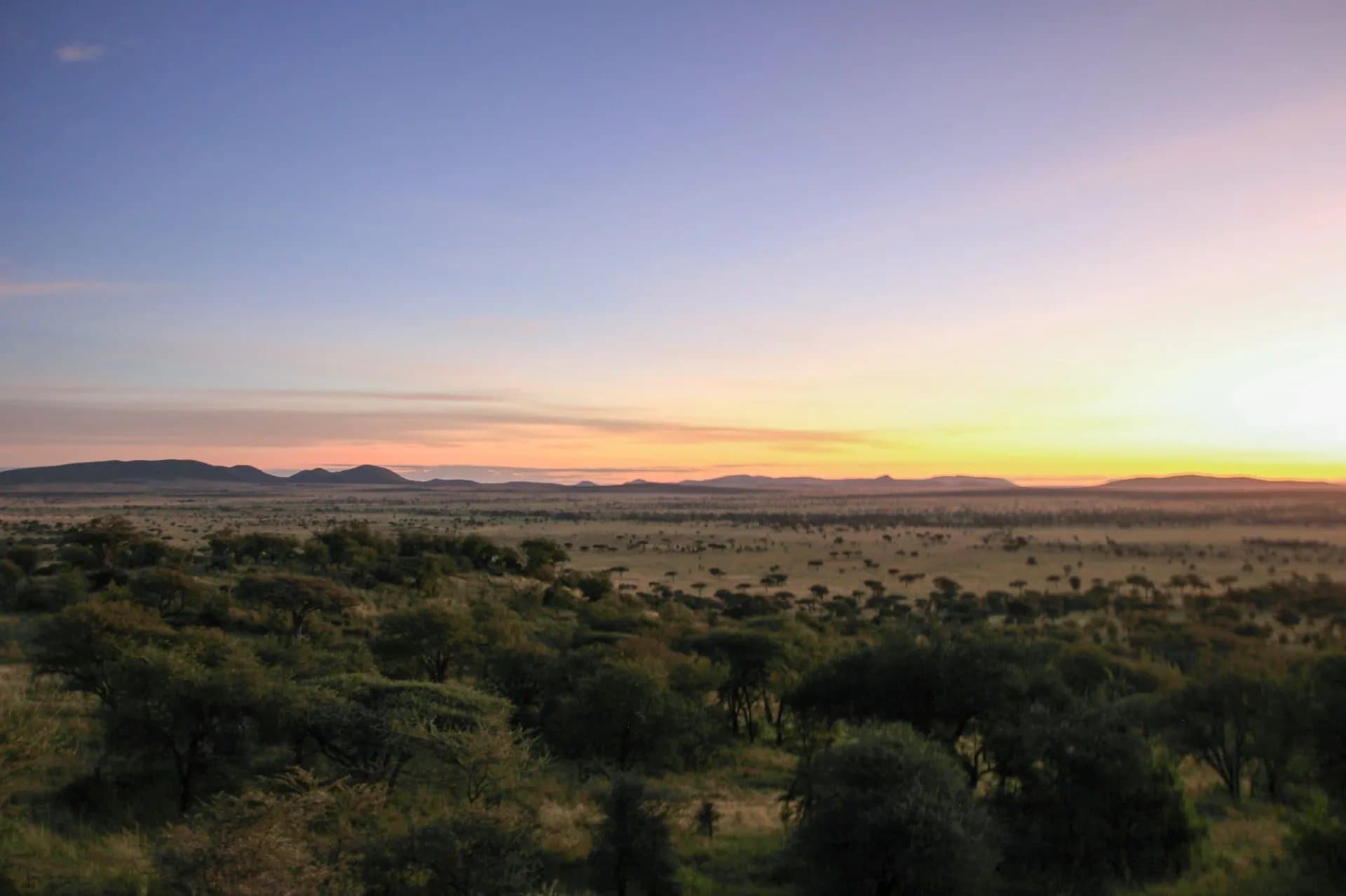
A fly-in wilderness safari to Tanzania's remote south and west, staying in a small number of intimate bush camps. Ruaha's landscape is unlike the north — rocky escarpments, ancient baobab forests, and the sand rivers where elephants dig for water in the dry months. Game viewing centers on the Great Ruaha River and its tributaries: huge lion prides (the park is famous for them), leopard, cheetah, and one of East Africa's best populations of African wild dog.
Katavi is the deeper cut — a floodplain system that spends the dry season in slow-motion crisis. As the water shrinks, everything concentrates: hippos jam into the last muddy pools in extraordinary numbers, crocodiles estivate in riverbank caves, and buffalo herds sweep the plains with lions in professional attendance. It is raw, occasionally brutal, and utterly unforgettable for the handful of people who see it each year.
Why This Is Worth the Extra Effort
The solitude is structural, not seasonal. These parks aren't quiet because you got lucky; they're quiet because distance and flight costs filter arrivals to a trickle. Camps are few and tiny. You will regularly have sightings — extraordinary ones — with zero other vehicles, all day.
The wildlife spectacle stands on its own. This is not "fewer animals, but private." Ruaha's lion prides are among the largest anywhere; wild dog sightings are realistic rather than mythical; and Katavi's dry-season hippo concentrations are one of the great overlooked spectacles in Africa.
It restores the feeling the north can lose. Safari veterans often describe Ruaha and Katavi as the trip that reminded them why they fell for Africa — the sense of being a visitor in something vast and indifferent, rather than an audience member at something managed.
When to Go
More than anywhere else in Tanzania, these parks have a real season. June to October is it: water shrinks, wildlife concentrates along the rivers, vegetation opens up, and Katavi's floodplain drama builds to its September–October crescendo. If you are making the effort to come this far, come in these months.
November to March greens the parks, scatters the game and brings superb birding — Ruaha remains rewarding for repeat visitors who know what they're looking at, but several camps close and Katavi effectively shuts down as the floodplains flood in earnest. April and May are a non-starter. The honest summary: this is a dry-season destination, and pretending otherwise serves nobody.
What a Typical Day Actually Looks Like
6:00 AM
Coffee as the bush wakes
Camps here are unfenced and alive at dawn — elephants in the sand river are a normal breakfast view.
6:30 – 11:00 AM
Long morning drive
Working the river lines where everything concentrates: lions, elephants digging wells, dogs if the luck runs.
Midday
Sleep when the lions do
Back in camp through the heat. Ruaha at noon belongs to the doves and anyone in a hammock.
4:00 – 7:00 PM
Afternoon into dusk
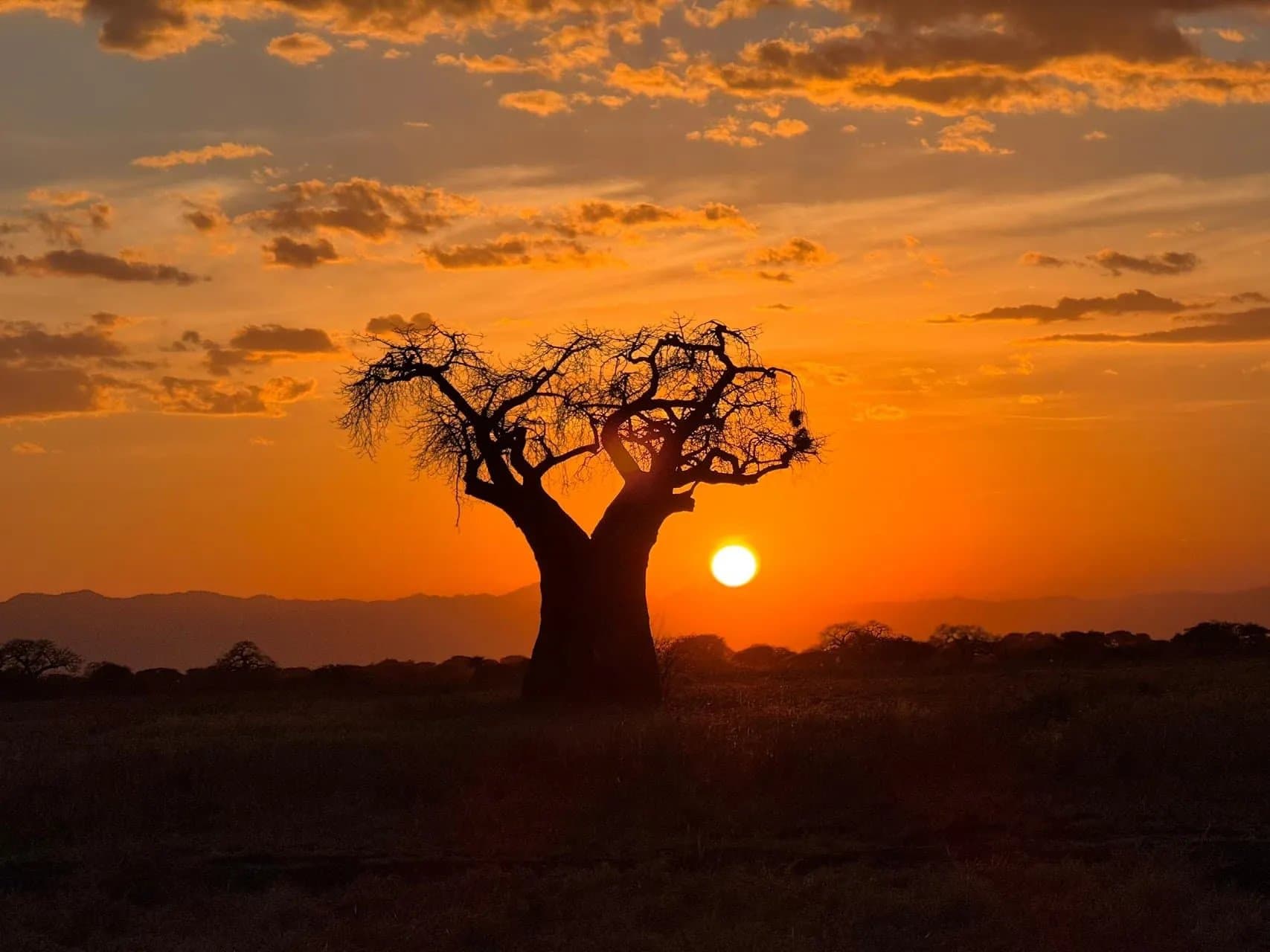
Golden light on baobabs, buffalo moving to water, and sundowners parked somewhere with a hundred-mile view.
Night
The unfenced soundtrack
Lions calling down the river, hyenas closer than you’d guess, and a Milky Way with zero competition.
What It Costs, and What Drives the Price
Remote comes at a price: itineraries start from around $4,200 per person for a Ruaha-focused fly-in, with combined southern circuits from $3,500 per person (7 days, Ruaha & Nyerere overlanding where practical) and extended wilderness routes from $5,200–$6,200 per person.
- ›Flights are the entry fee — light aircraft from Dar es Salaam (or connecting from Arusha) are effectively mandatory; Katavi requires a further, longer hop, which is why it pairs best with Ruaha rather than standing alone.
- ›Small camps, honest rates — with a dozen tents or fewer and full board in deep bush, per-night rates reflect supply lines measured in flight hours.
- ›Duration math — flight schedules make 3–4 nights per park the sensible minimum; a Ruaha-plus-Katavi combination wants seven-plus days.
- ›Season — the September–October peak commands the top rates; June and early July offer the same emptiness with slightly softer prices.
What's included
- Light aircraft flights as itinerary specifies
- All park fees & full-board bush camps
- Shared game drives (private on request)
- Guided walks where camps offer them
Not included
- International flights & visa
- Tips & gratuities
- Premium drinks at some camps
- Travel insurance
What to Pack
Standard dry-season safari kit, with three regional notes: light aircraft mean soft bags around 15 kg, full stop; tsetse flies patrol parts of both parks, so long sleeves and trousers in neutral tones (never blue or black, which attract them) are genuinely functional clothing; and evenings in June–August get properly cold in Ruaha's semi-arid air — bring the fleece you almost left behind.
Photo gallery
What our guests say
“I've done safaris in Kenya and South Africa, but Tanzania with EWA Safari Outfitters was on another level. No crowds, no cookie-cutter experiences — pure, authentic wilderness. The balloon over the Serengeti at sunrise was life-changing.”
James Kowalski — 10-Day Northern Circuit
“Professional and easy going — that perfectly sums up EWA Safari Outfitters. Our guide Mike was very friendly, easy to talk to, and deeply knowledgeable about the wildlife and ecosystems. He made every game drive exciting and informative. The whole team was responsive, efficient, and responsible throughout the entire trip. Cannot recommend them enough.”
Abimbola — Tanzania Safari
Frequently asked questions
Is this a good first safari?
Usually not — and we say that with love. First safaris thrive on the north’s density and infrastructure. Ruaha and Katavi reward travelers who already know the rhythm of the bush and are chasing depth and solitude rather than a checklist. The exception: experienced wilderness travelers who would actively resent vehicle queues — start here and never look back.
Will I really see wild dogs in Ruaha?
No one can promise dogs — they range enormous territories — but Ruaha is one of East Africa’s most realistic places to try, holding one of the region’s important populations. Denning season (roughly June–August) anchors packs to den sites and meaningfully improves the odds. Guides share sightings across camps, and luck favors longer stays.
How do Ruaha and Katavi compare to the Serengeti?
Different genres. The Serengeti is open-plains spectacle at scale, with the migration and the infrastructure that follows it. Ruaha is rugged, baobab-studded and predator-rich; Katavi is a raw dry-season pressure cooker. You trade the migration and polish for solitude, enormous prides and the feeling of having Africa to yourself.
Can I combine both parks in one trip?
Yes — that is the classic western loop: fly Dar or Arusha to Ruaha for three to four nights, hop onward to Katavi for three, and return. Eight days does it properly. Katavi on its own rarely justifies the flight; Katavi as Ruaha’s second act absolutely does.
Are the camps comfortable, given how remote this is?
Genuinely — “remote” here means small and far, not spartan. Expect proper beds, en-suite bathrooms with hot bucket or plumbed showers, cold drinks and excellent cooking, in unfenced camps where the wilderness starts at the tent flap. What you give up is choice: each park has only a handful of properties, which is rather the point.
Is it safe, being this far out?
Camps and guides here run to the same professional standards as the north, with radio/flight links for the rare emergency; the unfenced-camp rules (escorts after dark, listen to your guide) are standard practice across wild Africa. The remoteness affects the ambience, not the safety margin.
When is the best time to visit Ruaha and Katavi?
June to October, unambiguously — shrinking water concentrates the wildlife along the rivers, and Katavi builds to its September–October hippo-and-buffalo crescendo. These are genuine dry-season parks; April and May are effectively closed.