The complete guide
The first thing that changes when you step out of the vehicle is the sound. In a 4x4 you watch the bush like a film; on foot, you're in the audio mix — sandpaper rasp of grass on your boots, a francolin detonating out of cover, and somewhere beyond the trees, low and unhurried, the huff of a hippo deciding whether you're worth its attention. Your guide reads a scuff of sand and says, quietly, "lion, last night," and the hair on your arms votes before your brain does.
This is what a walking safari does: it takes the same landscape you'd drive through and turns the intensity up by an order of magnitude — not because you see more, but because you feel all of it. And there are few better places on the continent to do it than Nyerere National Park, the vast, riverine, gloriously untamed successor to the Selous Game Reserve in Tanzania's deep south.
What Exactly Is a Walking Safari in Nyerere?
A walking safari means exploring the bush on foot in small groups — typically two to three hours in the cool of the morning — led by a professional walking guide and an armed park ranger, both trained for exactly this. Walks focus on everything vehicles miss: tracks, dung, termite architecture, medicinal trees, insects, birds, and the studied art of approaching big animals safely downwind.
In Nyerere, walking is one movement in a larger composition. The park is built around the Rufiji River — one of East Africa's great waterways — so days combine walking with boat safaris among hippos and crocodiles, classic game drives across a landscape of lakes and palm groves, and, for the committed, fly camping: a night under mosquito nets in the open bush, with the wilderness conducting the soundtrack.
Why Nyerere Is the Place to Do It
Walking is genuinely permitted here. The northern parks largely restrict visitors to vehicles; Nyerere's rules and traditions make foot safaris a core activity rather than a novelty add-on. This is one of Tanzania's true walking destinations, with guides who walk daily, not occasionally.
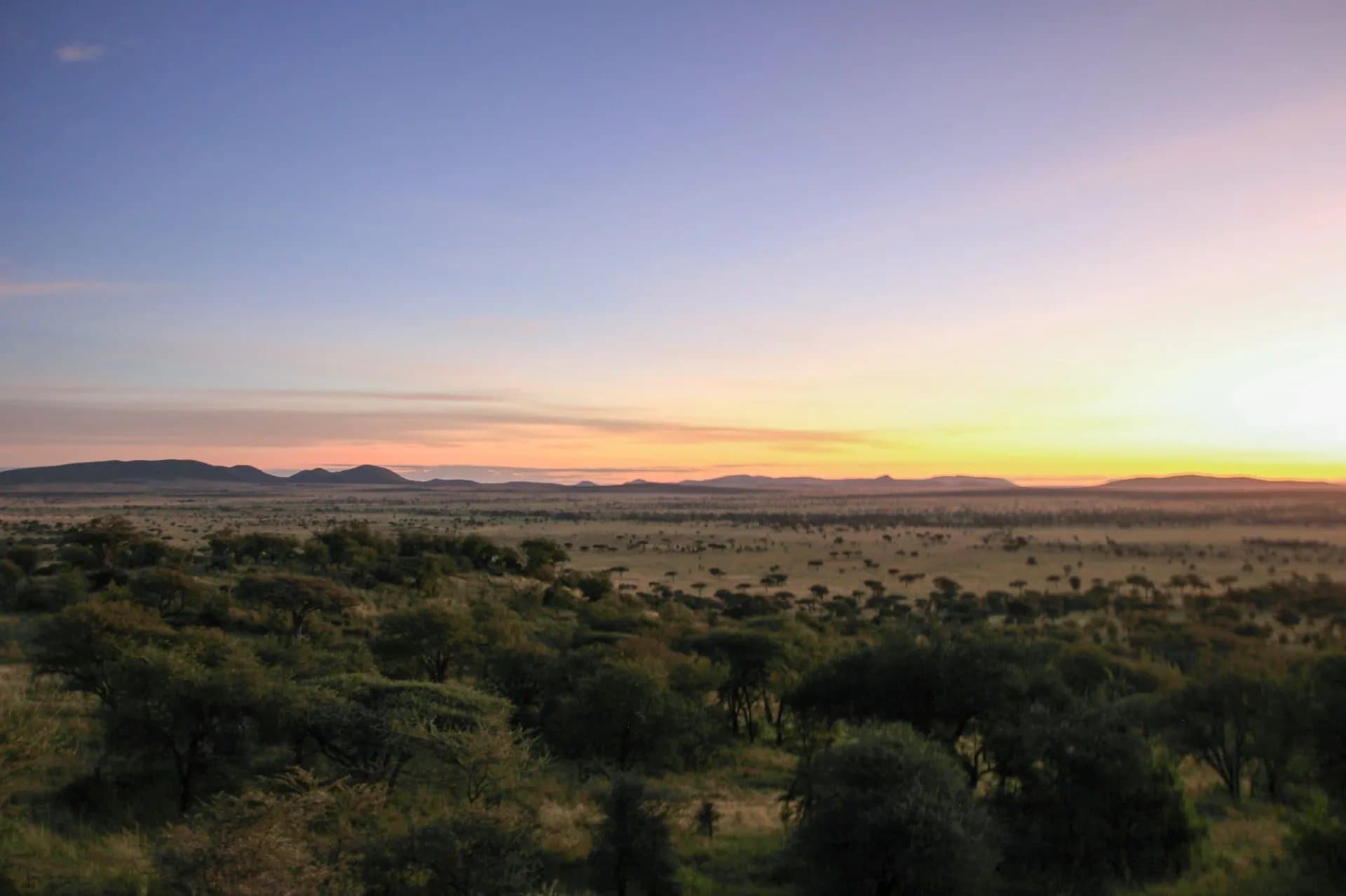
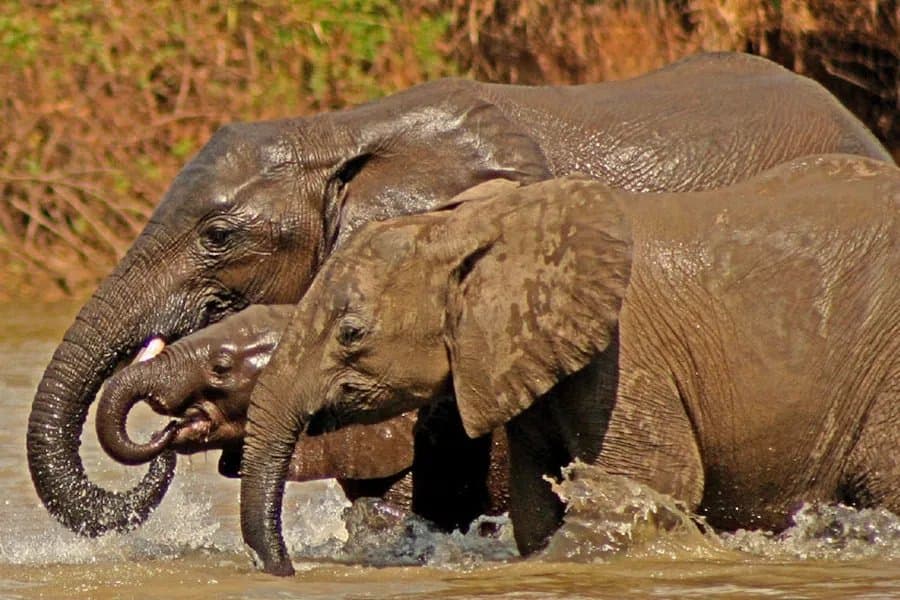
The wilderness is the real thing. Nyerere covers roughly 30,000 square kilometers — among the largest national parks anywhere on Earth — with a fraction of the vehicles of the north. Wild dog territories, some of Tanzania's biggest elephant and buffalo concentrations, and river systems crammed with hippo make it feel like the Africa of fifty years ago.
The variety of movement. Walk in the morning, boat in the afternoon, drive at dusk. No other Tanzanian park lets you experience the same ecosystem from three angles in a single day — and the boat safari at golden hour, drifting past yawning hippos, is worth the trip on its own.
When to Go
June to October is the honest answer for a walking-focused trip: dry trails, thinning vegetation, and wildlife concentrated along the Rufiji and its lakes, where the walking is. Sightlines are long — which matters more on foot than in any vehicle — and mornings are cool for the walk itself.
November to February greens the park beautifully and fills it with migrant birds; walking continues, but taller grass shortens sightlines and shifts the emphasis toward boat and drive. March to May brings the long rains: many camps close, tracks flood, and walking becomes impractical. Unlike the northern circuit, Nyerere genuinely does have an off-season — respect it.
What a Typical Day Actually Looks Like
5:45 AM
Tea, then boots on
Walks leave early to use the cool hours — animals are active, and so is the light.
6:15 – 9:30 AM
The morning walk
Single file, guide in front, ranger alongside. Tracks, trees, termites — and heart-rate moments when the bush delivers one.
Midday
Brunch & river time
Back to camp for brunch and a siesta while the heat peaks. The Rufiji does its slow, glittering thing past the veranda.
4:00 PM
Boat safari or game drive
Hippos, crocs and carmine bee-eaters from the water, or a drive through the lake country as it cools.
Evening
Dinner — or fly camp
Dinner in camp under the stars, or, on fly-camping nights, a bedroll, a net, a fire and the unedited sounds of the bush.
What It Costs, and What Drives the Price
Walking-focused Nyerere itineraries start from around $2,900 per person for 4–7 days, and our full southern circuit combining Nyerere with Ruaha runs from $3,500 per person for 7 days. As a same-park add-on to an existing safari, a guided walk can cost as little as $59 per person — the full walking-safari format simply builds the trip around it.
- ›Getting there — Nyerere is best reached by light aircraft from Dar es Salaam or Zanzibar; flights cost more than the northern circuit’s road access but deliver you into deep wilderness in under an hour.
- ›Camp style — the park’s camps skew small, riverine and characterful rather than mass-market; fly-camping nights, where offered, add cost and subtract walls.
- ›Activity mix — walking, boating and driving are often bundled; itineraries heavy on private walks and fly camps price higher than drive-led ones.
- ›Season — dry-season months command the strongest rates; November and February offer real value with only modest compromises.
What's included
- Guided walks with armed ranger
- Boat safaris on the Rufiji
- Park fees, meals & accommodation
- Game drives as itinerary specifies
Not included
- Flights to/from the park
- Visa & international flights
- Tips & gratuities
- Travel insurance
What to Expect Physically — and What to Pack
Walks cover perhaps five to eight kilometers at a deliberate, stop-start naturalist's pace — this is about attention, not distance, and anyone comfortably able to walk a couple of hours can do it. The non-negotiables are sturdy closed shoes, neutral colors (bright white on foot is a genuine problem in a way it isn't in a vehicle), and the discipline to follow your guide's instructions instantly and without debate. The minimum age for walking is typically 16 in Tanzania's parks.
Photo gallery
What our guests say
“Professional and easy going — that perfectly sums up EWA Safari Outfitters. Our guide Mike was very friendly, easy to talk to, and deeply knowledgeable about the wildlife and ecosystems. He made every game drive exciting and informative. The whole team was responsive, efficient, and responsible throughout the entire trip. Cannot recommend them enough.”
Abimbola — Tanzania Safari
“Great experience! We had an amazing time during this safari journey. Mike was always present and left a great impression — he was warm, professional, and made sure we saw as much wildlife as possible. It was one of the most extraordinary experiences we have ever had in Tanzania. I would not hesitate to book with EWA Safari Outfitters again.”
Cindy — Tanzania Wildlife Safari
Frequently asked questions
Is walking among big animals actually safe?
Walking safaris in Nyerere are run to strict protocols refined over decades: professional walking guide, armed ranger, small groups, single file, downwind approaches and generous distances. Incidents are vanishingly rare precisely because the rules are boring and absolute. Your only job is to do exactly what your guide says, immediately.
Will I see fewer animals than on a driving safari?
From the vehicle-count perspective, yes — you cover perhaps five kilometers on foot versus fifty by car. But the encounters you do have land differently: a giraffe at eighty meters on foot is more electric than one at ten meters through a window. Most itineraries combine both, so you sacrifice nothing overall.
How fit do I need to be?
Moderately — walks are two to three unhurried hours over mostly flat ground, with frequent stops. Heat is the main tax, which is why everything happens early. If you can walk five kilometers at home without drama, you are fit enough.
What is fly camping?
A night walked or driven out from the main camp: bedrolls under mosquito nets, a campfire dinner, a bucket shower, staff and your armed ranger nearby, and absolutely nothing between you and the stars. It is the deepest immersion this experience offers, and people who try it never shut up about it — deservedly.
Can children join walking safaris?
Park rules set the minimum walking age at around 16. Families with younger children can still base themselves in Nyerere for boat safaris and game drives — both are superb — while adults alternate walking mornings.
How does Nyerere compare to the Serengeti?
Different instruments. The Serengeti is open plains, huge herds and the migration spectacle; Nyerere is rivers, lakes, palms and a wilder, emptier feel with a fraction of the visitors. First safari: north. Second safari, or a first for travelers allergic to crowds: south — and this is its flagship experience.
What do you actually see on a walking safari?
Everything the vehicle skips: fresh tracks read like a newspaper, termite architecture, medicinal trees, birds at eye level — plus giraffe, antelope and elephant encountered at distances that make your pulse audible. Big-cat sightings happen but are the bonus, not the point.